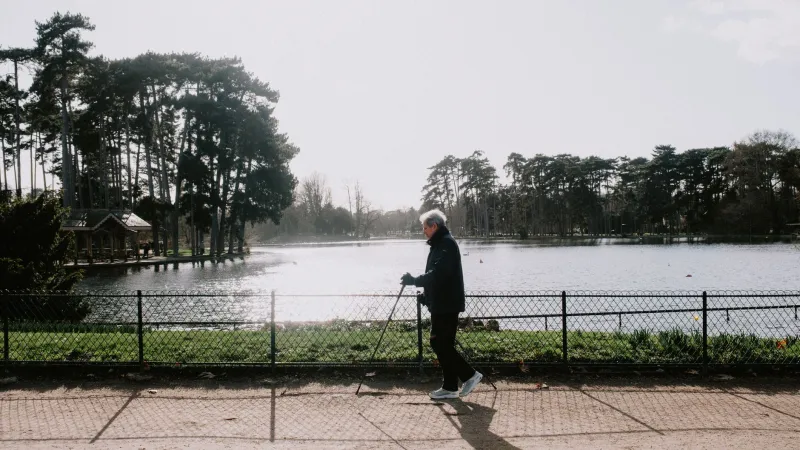
The Steady Pace: Exercise, Epilepsy and Risk That Is Understood, Not Avoided

Exercise advice for people with epilepsy has often been written as a list of prohibitions. That approach is understandable: seizures can be unpredictable, and some activities carry greater consequences if a seizure occurs. Yet a blanket warning is not the same as useful guidance. In 2026, the more helpful question is not whether people with epilepsy should move, but how they can move with a clear understanding of their own pattern, their environment and the support available.
Why movement deserves a fair hearing
Regular physical activity is associated with better cardiovascular health, stronger bones, improved mood and more consistent sleep. Those benefits matter for everyone, and they matter for people with epilepsy too. Sleep, stress and general wellbeing can influence how seizures behave, so an exercise routine that supports those areas may be a reasonable part of a wider self-management plan. This is not a claim that exercise treats epilepsy. It is a claim that avoidance carries its own costs.
The evidence does not suggest that moderate exercise generally increases seizure frequency. Some people do report that fatigue, dehydration, overheating or a missed dose around exercise can act as triggers, and those experiences deserve attention. The practical task is to separate a recognised risk that can be reduced from a vague fear that simply narrows life.
Risk is not a single number
A seizure in a quiet living room is not the same as a seizure in a swimming pool or on a busy road. Risk depends on seizure type, frequency, warning signs, recovery time and the environment. Someone with well-controlled seizures and a reliable aura may make different choices from someone whose seizures are frequent and unpredictable. Neither person should be handed a generic leaflet and left to guess.
A useful conversation with your epilepsy team can cover three questions. What is my seizure pattern at present? What would a seizure look like in this specific activity? What adjustments would lower the consequence without removing the benefit? Those answers are more useful than a simple yes or no.
The gym: ordinary adjustments, not special treatment
Most gym activity can be adapted without drama. Cardiovascular machines, resistance work and group classes all have practical variations. If you use free weights, a spotter or a staff member nearby may be sensible, especially when a seizure could cause a fall. If breath-holding during heavy lifting has been discussed as a concern for you, ask for advice on breathing and load. None of this needs to become the defining feature of your membership.
It is reasonable to tell a gym instructor or leisure-centre duty manager that you have epilepsy, what your seizures usually look like and what they should do if one occurs. Keep your phone and emergency contact accessible. Avoid training alone in an isolated room. These are low-burden measures that preserve independence while reducing the chance of a preventable complication.
Water requires a different conversation
Swimming carries a higher consequence if a seizure happens in the water, so it deserves a specific plan rather than a general rule. Swimming alone is generally not advisable for anyone with uncontrolled or unpredictable seizures. A supervised session, a companion who knows what to do and a lifeguard who has been informed are practical safeguards. Some UK leisure centres may ask for medical clearance or a supervised arrangement; that is not a judgment on your capability, but a reflection of their safety procedures.
Pool staff are used to adapting sessions. A calm, factual conversation at the desk is usually more effective than a long medical history. Explain the seizure type, how long recovery typically takes and whether you need space or assistance afterwards. If swimming is important to you, ask what arrangements the centre can offer rather than assuming the answer is no.
Wheels, helmets and route choice
Cycling can be a flexible form of exercise, but the setting matters. A static bike removes road risk entirely. A quiet off-road path with a companion is different from solo cycling on a fast road. A helmet, identification and a charged phone are sensible for most riders; for someone with unpredictable seizures, avoiding solo road cycling is a reasonable precaution rather than an overreaction.
The same principle applies to scooters, skateboards and e-bikes. The question is not whether the activity is forbidden, but whether the likely consequence of a seizure can be reduced. If it cannot be reduced enough for your current pattern, that activity may be one to revisit later with your clinician.
Team sports and the social benefit
Football, cricket, netball, running clubs and parkrun offer more than fitness. They provide routine, company and a sense of ordinary participation. In team sports, a coach or teammate who knows about your epilepsy can be a useful point of contact. A simple plan is often enough: who to call, whether you usually need an ambulance, and how you prefer to be treated afterwards.
Contact sports carry additional considerations, but they are not automatically excluded. The right answer depends on seizure control, the sport and the level of physical contact. Discussing the specific activity is more useful than deciding in the abstract.
Talking to instructors without overstating risk
A short script can make the conversation easier. “I have epilepsy. My seizures are usually [type and frequency]. If I have one, please do [specific first aid]. I usually recover in [time]. My emergency contact is [name and number].” This gives staff what they need without turning you into a medical case study. It also gives you a chance to correct assumptions before they become rules.
Building a routine that holds
Start at a level that feels sustainable rather than heroic. Consistency matters more than intensity. Keep water nearby, avoid exercising when sleep-deprived or unwell, and do not skip anti-seizure medicines to fit a session. A simple diary of activity, sleep and any seizure-related events can reveal patterns without turning exercise into surveillance.
For confidence, graded exposure can help. Begin with a familiar activity, at a familiar time, with a person you trust. Extend the duration or change the setting only when the previous step feels manageable. The aim is not to eliminate all risk, which is impossible, but to make the risk understood and proportionate.
When to pause and seek advice
Contact your epilepsy team if exercise seems to change your seizure pattern, if you have a seizure with injury, or if you are avoiding activity because of fear rather than a clear plan. A medication review, a change in seizure type or a new trigger all deserve a conversation. Exercise should fit alongside epilepsy care, not compete with it.
Movement is not a test of courage, and caution is not a failure of confidence. The steadier approach is to know your pattern, adapt the environment and keep the benefits in view. For many people with epilepsy, that is the difference between a routine that lasts and a list of activities quietly abandoned.